
Overview
Alameda County Behavioral Health (ACBH) invites members of the community to present new and innovative approaches to be funded and explored in more depth. Each is a time-limited project that may introduce a novel, creative, and/or ingenious approach to a variety of mental health practices. The result – community defined practices and unique ideas from which the Alameda County mental health system, community based providers, and community members can learn.
ACBH funds innovative strategies to create change.
What is an Innovative Project?
An Innovation Project may introduce a novel, creative, and/or ingenious approach to a variety of mental health practices. An Innovation Project is a time-limited project that contributes to learning, rather than having a primary focus on providing a service. Innovation Projects can contribute to learning at any point across the spectrum of an individual or family’s needs relating to mental health, from prevention and early intervention to recovery supports. Innovation Projects may run for up to five years.
Innovative Project Criteria
What’s Happening Now
Supportive Housing Community Land Alliance (SHCLA)
The Supportive Housing Community Land Alliance (SHCLA) (aka CLA; Land Trust; Land Trust Program), is based on a community land trust model, is a nonprofit, community-based organization designed to ensure community stewardship of land. Community land trusts are often associated with conservation efforts. However, the significant effort to ensure affordable long-term housing through this form of ownership is SHCLA’s mission. The SHCLA will acquire land and maintain ownership of it permanently. The SHCLA will enter long-term, renewable leases with residents. If the resident leaves, the resident earns a portion of the increased property value. The remainder is kept by the trust, preserving the affordability and purpose of the property for future households.
Community Program Planning Process (CPPP)
Alameda County Behavioral Health (ACBHD) continues to be fully invested in having a dynamic community process that is inclusive of all community with the County. Community involvement from the residents of the county is essential to Innovation planning and program development. ACBHD has had challenges in its outreach to many of its diverse populations. These challenges include outreach and engagement to unserved and underserved individuals in both urban and rural areas. The County is dedicated to developing a revitalized and improved approach to ensure more meaningful input from all individuals living in the county. The remainder is kept by the trust, preserving the affordability and purpose of the property for future households.
Forensic and Reentry Services
Alameda County Behavioral Health (ACBHD) has identified the significant need to support individuals with serious mental health challenges who are involved with the justice system. This is a pervasive and complex issue in Alameda County as well as across the state and nation that requires multiple approaches to address. ACBHD has developed a forensic and reentry plan that sets forth the myriad approaches to be implemented, including systems, collaborative, and program initiatives and interventions. The ACBHD forensic and reentry plan includes the approaches identified and included in these two innovation projects. All services are voluntary and seek to provide voice and choice, particularly in situations where that autonomy may otherwise be limited by arrest and/ or incarceration. Projects: Peer-Led Continuum Forensic and Reentry Services Alternatives to Confinement Continuum Forensic and Reentry Services.
Past Innovation Projects
Community Assessment Treatment Teams (CATT)
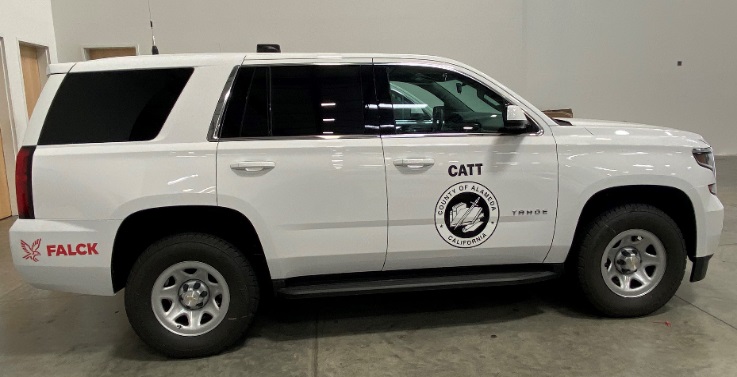
The CATT program is using a mobile crisis transport staffing model of a licensed mental health clinician teaming up with an Emergency Medical Technician in an unmarked vehicle specially designed for the CATT teams. These teams access technological support, ReddiNet, to enable the CATT teams to connect clients to a wider and more appropriate array of services.
A detailed year one report from the project’s evaluation team can be located in the MHSA Annual Update FY22-23.
This is a project about collaboration between stakeholders:
- Alameda County Behavioral Health
- Alameda County Emergency Medical Services
- 911 services
- Local law enforcement agencies and
- Bonita House providing licensed mental health clinicians
“CATT knew what to do and what to say…they were more professional than what I experienced in the past; everyone should act like that!”
CATT Program Client and Family Focus Group Participant
You can read more about the progress of the CATT program in the MHSA Annual Update FY22-23.
Mental Health Technology (MH Tech 2.0)
MH Tech 2.0 is a reanimation of an earlier County technology project. MH Tech 2.0 focuses on creating mental health apps specifically for Alameda County. This project utilizes a technology-based approach in order to increase access to mental health care and support for individuals in Alameda County who are experiencing situational induced trauma.
A detailed year one report from the project’s evaluation team can be located in the MHSA Annual Update FY22-23.
This is a project about collaboration between stakeholders:
- Alameda County Behavioral Health
- Alameda County Emergency Medical Services
- 911 services
- Local law enforcement agencies and
- Bonita House providing licensed mental health clinicians
Caregivers of family members who suffer Serious Mental Illness (SMI) or a Serious Emotional Disturbance (SED)

Korean Community Center of the East Bay’s (KCCEB) app, WeCare, centers around Chinese speaking Caregivers

Mental Health Association for Chinese Community’s (MHACC) app, MiSunshine is in Chinese and English and can be found on Google Play and Apple App Store
Youth/Transition Age Youth (TAY) who are victims of trauma induced by multiple forms of violence

Niroga Institute’s app, InPower, introduces the use of trauma-informed dynamic mindfulness to release stressors and strengthen your daily self-care routine

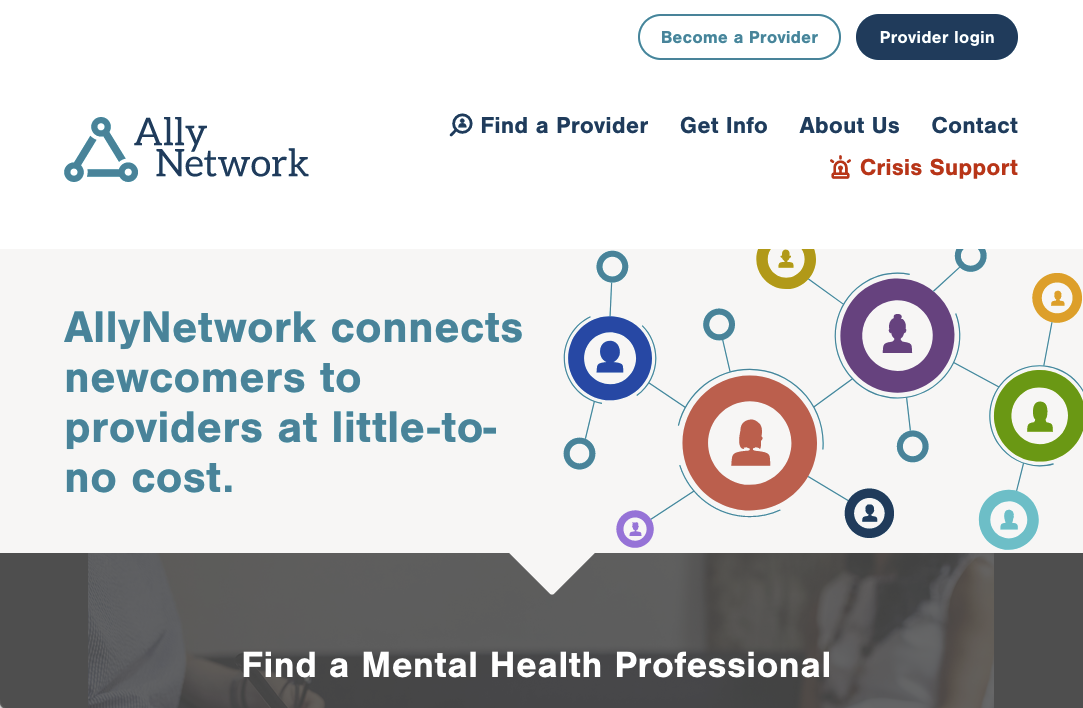
Diversity in Health Training Institute’s (DHTI) project, Ally Network, has been developed to be used as a website and an app for TAY to access mental health resources from providers who are no cost or reduced cost. Resources can be found in over 25 languages
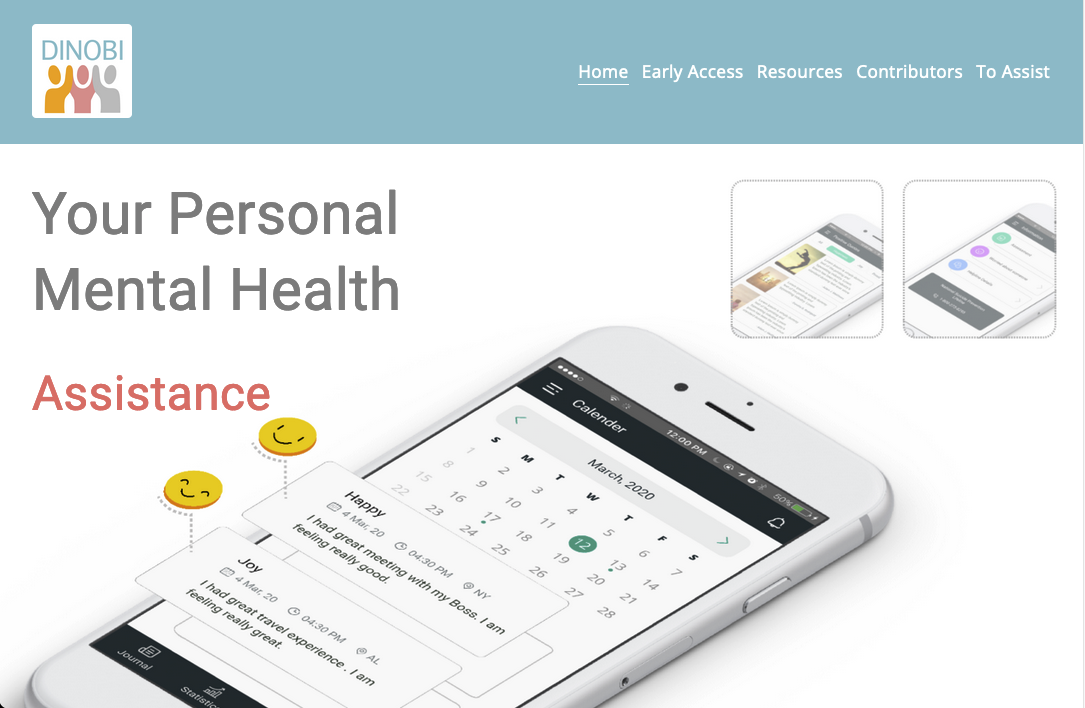
Attempted Suicide Survivors – Both of these apps bring support and intervention resources to reduce isolation for the user. Both of these apps can be found on Google Play and NAMI’s Dinobi is currently only on Google Play.

Immigrants, Asylees and Refuges
DHTI’s project, Ally Network, has been developed to be used as a website and an app for this population to access mental health resources from providers who are no cost or reduced cost. Resources can be found in over 25 languages

KCCEB’s app, Community Thrive, developed specifically for Korean business owners who experienced trauma due to racism and violence gives users tangible solutions to their damaged property before addressing mental health. The app is available in the Korean language.
You can read more about the progress of the MH Tech 2.0’s in the MHSA Annual Update FY22-23.
Supportive Housing Community Land Alliance (SHCLA)
The SHCLA is based on a community land trust model, a nonprofit community-based organization designed to ensure community stewardship of land. Community land trusts are often associated with conservation efforts. However, the significant effort to ensure affordable long-term housing through this form of ownership is the SHCLA’s mission. The SHCLA will acquire land and maintain ownership of it permanently so long-term, renewable leases with residents can be accomplished. If the resident leaves, the resident earns a portion of the increased property value. The remainder is kept by the trust, preserving the affordability and purpose of the property for future households.

You can read more about the progress of the SHCLA in the MHSA Annual Update FY22-23.
Community Based Learning Trainings
Advancing Efforts to Improve Health Outcomes
Community Based Learning Trainings are free to Alameda County Behavioral Health systems partners, faith based communities and non-profit organizations that want to improve health outcomes for consumers and family members in the areas of mental health and substance use disorders. Alameda County Behavioral Health Ethnic Services Department is able to offer trainings through funding from Prop 63, the Mental Health Services Act (MHSA).
For questions or technical assistance with the Innovation Grants Program or Community Based Learning Series, please contact us at:
asquare.hhrec@gmail.com