
The Behavioral Health Services Act
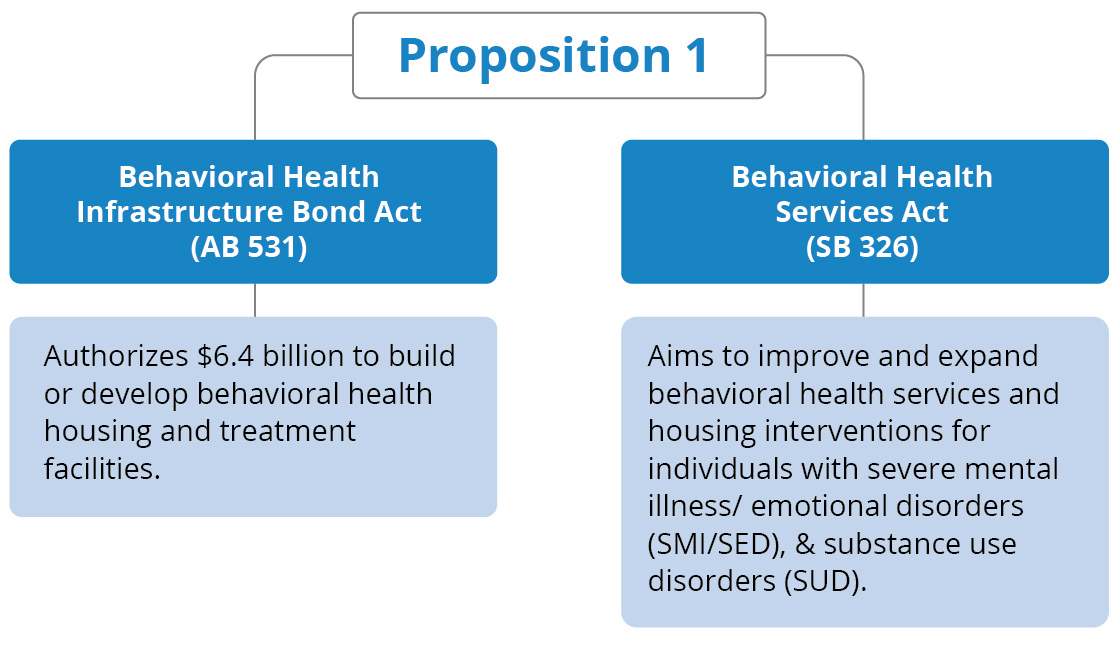
The Behavioral Health Services Act (BHSA) passed as Proposition 1 by the California voters on March 5, 2024. BHSA includes two components: Behavioral Health Infrastructure Bond Act (AB 531) and the Behavioral Health Services Act (SB 326). BHSA signifies a philosophical shift from prevention, intervention, and treatment across the mental health spectrum to focus on the most severely mental ill individuals. It allows for the inclusion of eligible programs for those with substance use conditions and places significant importance on housing and homelessness. There is a statewide commitment to increased accountability and transparency in how BHSA funds will be reported.
BHSA Target Populations
The target population for the Behavioral Health Services Act generally includes individuals who are dealing with significant behavioral health needs. This includes those with mental health conditions and/or substance use disorders.

BHSA Priority Populations
Eligible adults and older adults, or eligible children and youth who are:
- Chronically homeless or experiencing homelessness or at risk of homelessness
- In, or at risk of being in, the justice system
- Re-entering the community from prison or jail or youth correctional facility
- At risk of conservatorship or in the child welfare system
- At risk of institutionalization
What BHSA Funds
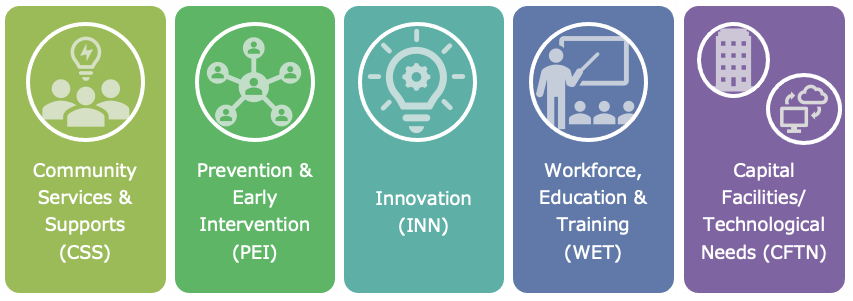
The Mental Health Services Act funding components will change under the Behavioral Health Services Act.
Mental Health Services Act

Behavioral Health Services Act
BHSA Funding Breakdown
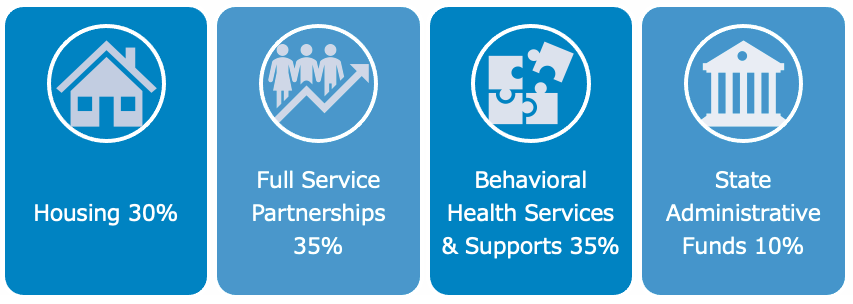
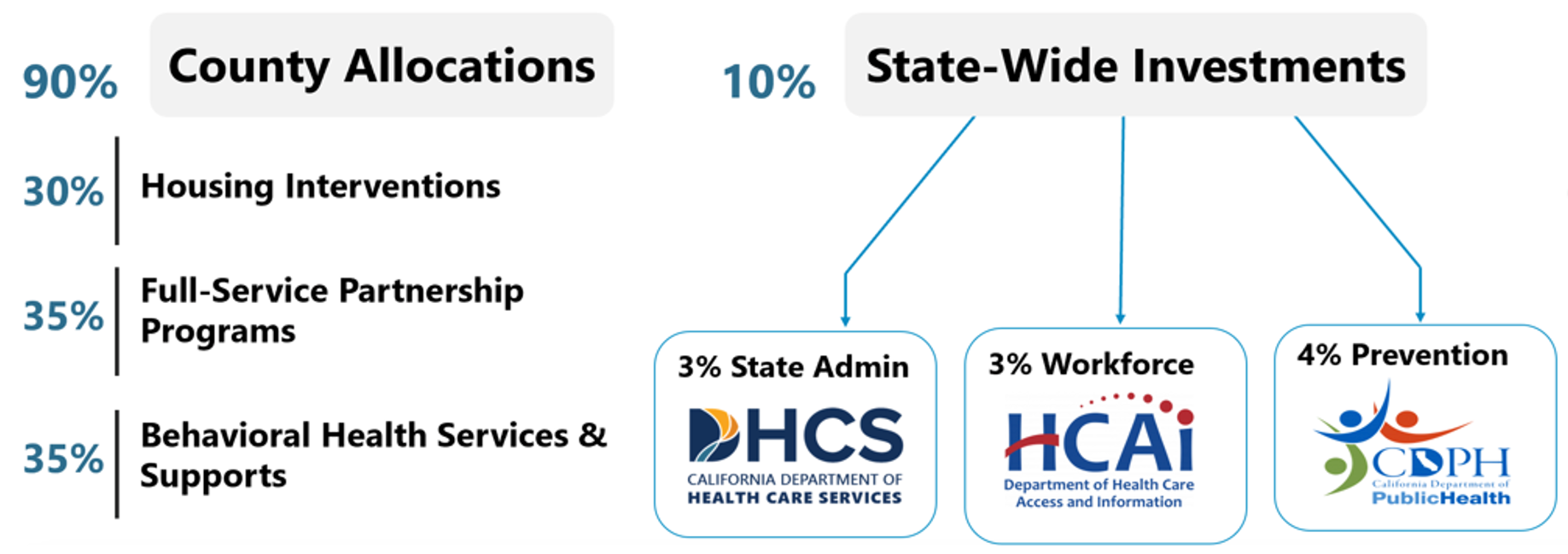
Total BHSA revenue is distributed between county and state-wide allocations.
BHSA Components
30% Housing:
- Interventions to include rental subsidies, operating subsidies, shared housing, family housing for eligible children and youth, and the non-federal share of certain transitional rent.
- Half of this amount (50%) is prioritized for housing interventions for the chronically homeless.
- Up to 25% may be used for capital development.
35% Full-Service Partnerships:
- Comprehensive and intensive care for people at any age with the most complex needs (also known as the “whatever it takes” model).
35% Behavioral Health Services and Supports (BHSS):
- Includes early intervention; outreach and engagement; workforce; education and training; capital facilities and technological needs; and innovative pilots and projects.
- A majority (51%) of this amount must be used for intervention in the early signs of mental illness or SUDs.
- A majority (51%) of early intervention services and supports must be for people 25 years of age and younger.
Key Proposition 1 and BHSA Implementation Dates
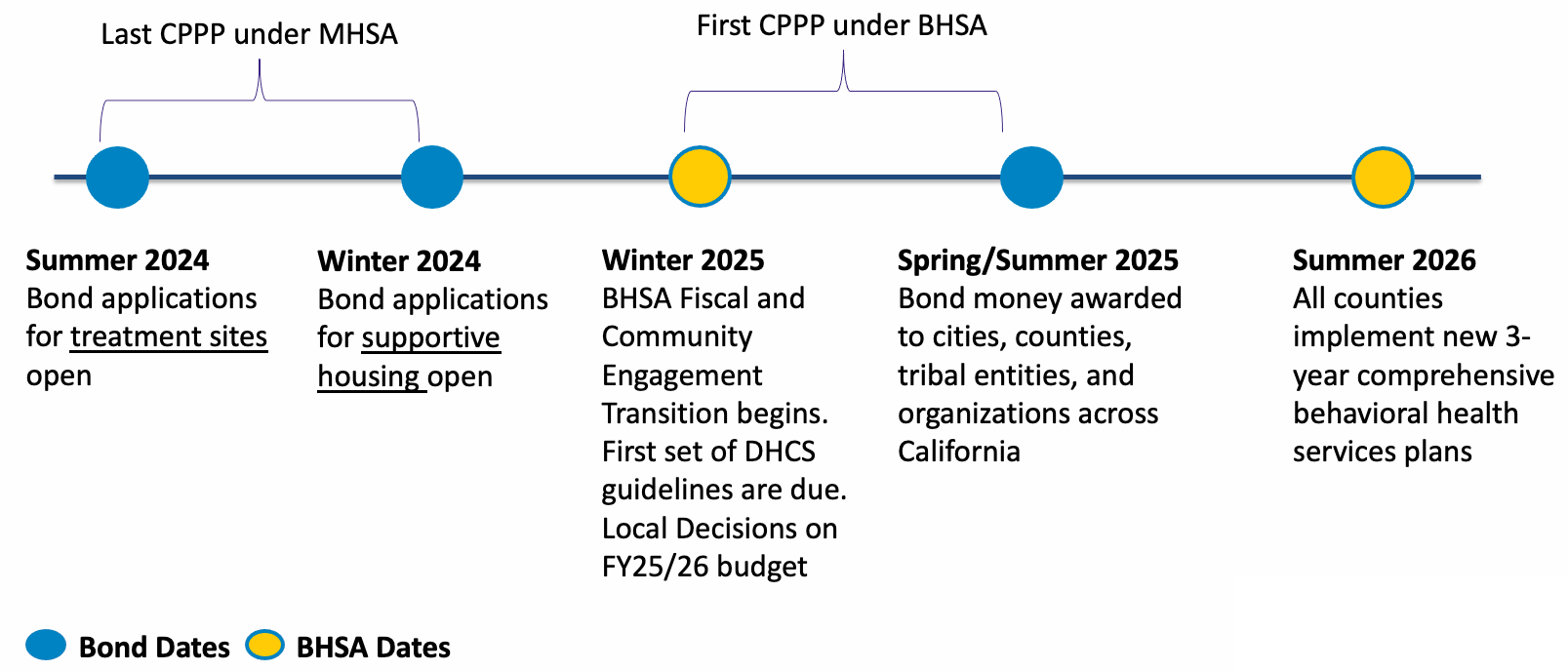
Proposition 1 key milestones to implement the Behavioral Health Services Act (BHSA) (SB 326) and Behavioral Health Infrastructure Bond Act (AB 531).
* As of 5/15/2024 https://mentalhealth.ca.gov/
What is the BHSA Integrated Plan?
The County Integrated Plan is a three-year plan required by the Behavioral Health Services Act that outlines how counties will utilize various behavioral health funding sources (i.e., BHSA, 1991 and 2011 Realignment, federal grant programs, federal financial participation from Medi-Cal, opioid settlement funds, local funding, and other funding) to meet statewide and local outcome measures, reduce disparities, and address unmet needs along the Behavioral Health Care Continuum. The plan must be developed through a transparent community planning process, approved by the county board of supervisors, and submitted via the Department of Health Care Services (DHCS) web-based portal in accordance with Welfare and Institutions Code §5963.02. To learn more, please visit: Integrated-Plans

View the Behavioral Health Services Act Informational Webinar
We look forward to hearing from the public and collaborating to make the Behavioral Health Services Act transition seamless and inclusive as possible. If you have any questions, you can email bhsa@acgov.org
Click here for frequently asked questions.
Stay up to date with MHSA
Sign up to receive information about MHSA programs and events.